


Smart Home Fee Pricing: What Landlords Must Charge and Disclose

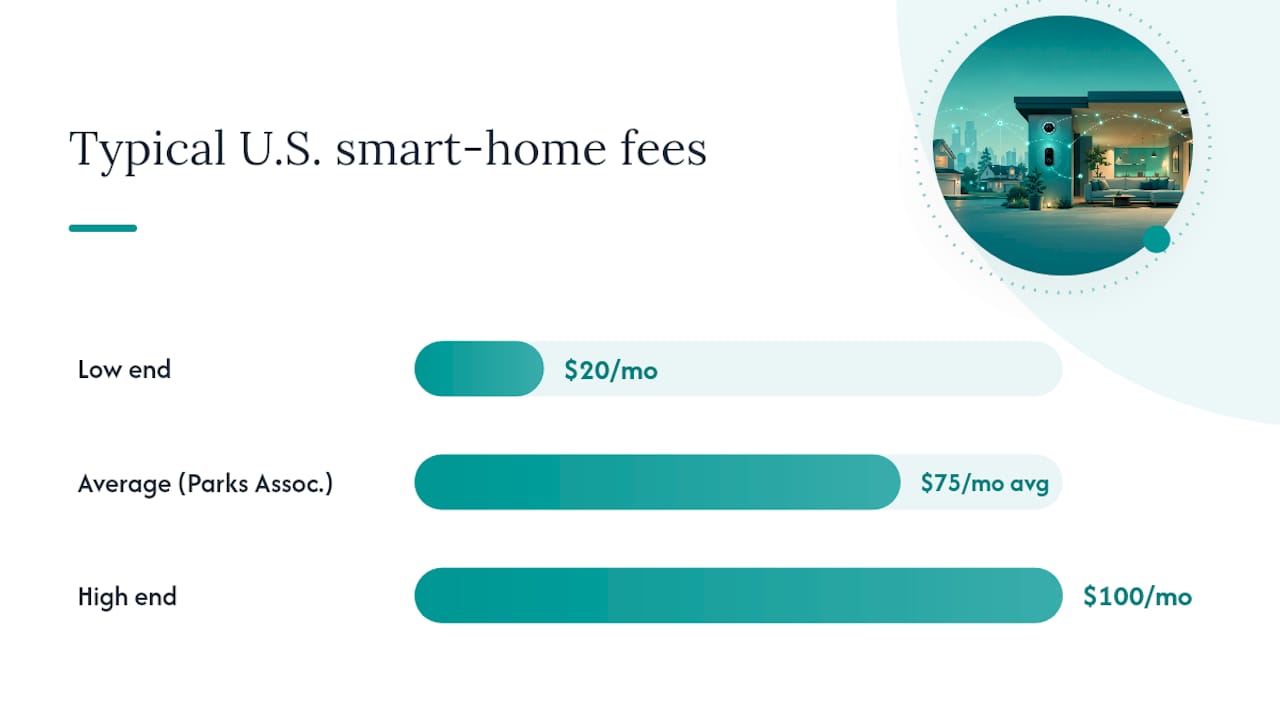
A smart home fee is a recurring amenity charge for building-provided connected devices and the platform services that support them. In the U.S., these fees typically run $20–$100/month, with Parks Associates reporting an average near $75 among residents who pay them. If a fee is mandatory, federal regulatory pressure now requires it to be included in advertised rent and clearly itemized in the lease. The FTC’s 2024 action against Invitation Homes made that expectation explicit: hiding mandatory fees in the fine print is an enforcement risk, not just a resident relations problem.
Here is what you need to know right now:
Landlords: If your smart-home or technology fee is mandatory, it must appear in your advertised monthly rent and be itemized in the lease. The Federal Register’s March 2026 rulemaking on unfair or deceptive rental fee practices tightens that obligation further.
Renters: Ask for a written itemization before signing. Confirm whether the fee is mandatory or optional and whether it was included in the advertised rent you saw.
Both: The market data, compliance checklist, and sample lease language below give you a practical framework to act on today.
Pro Tip: The Revenue Method, led by Joani Schumaker, advises multifamily operators on amenity pricing strategy and disclosure. The guidance in this article reflects that operator-side perspective.
Key Takeaways
Smart home fees average near $75/month per Parks Associates, must be disclosed in advertised rent when mandatory, and require an explicit opt-out policy, itemized lease language, and a quarterly operational review to hold up under regulatory and resident scrutiny.
Point | Details |
Typical fee range | U.S. smart home fees run $20–$100/month; the Parks Associates average is near $75. |
Mandatory fees must be disclosed | Include mandatory technology fees in advertised rent per FTC enforcement precedent and 2026 federal rulemaking. |
Itemize in the lease | Specify devices, services, ownership, opt-out terms, and data privacy in a written lease addendum. |
Test before scaling | Pilot fees on turnover units and measure opt-out rate and retention delta before portfolio-wide rollout. |
The Revenue Method | Provides amenity pricing reviews and lease language audits to help operators charge fairly and disclose correctly. |
Table of Contents
What does a smart home fee actually cover?
The label “smart home fee” covers a wide range of services, and the scope determines whether the price is reasonable. At minimum, expect the fee to include one or more of the following:
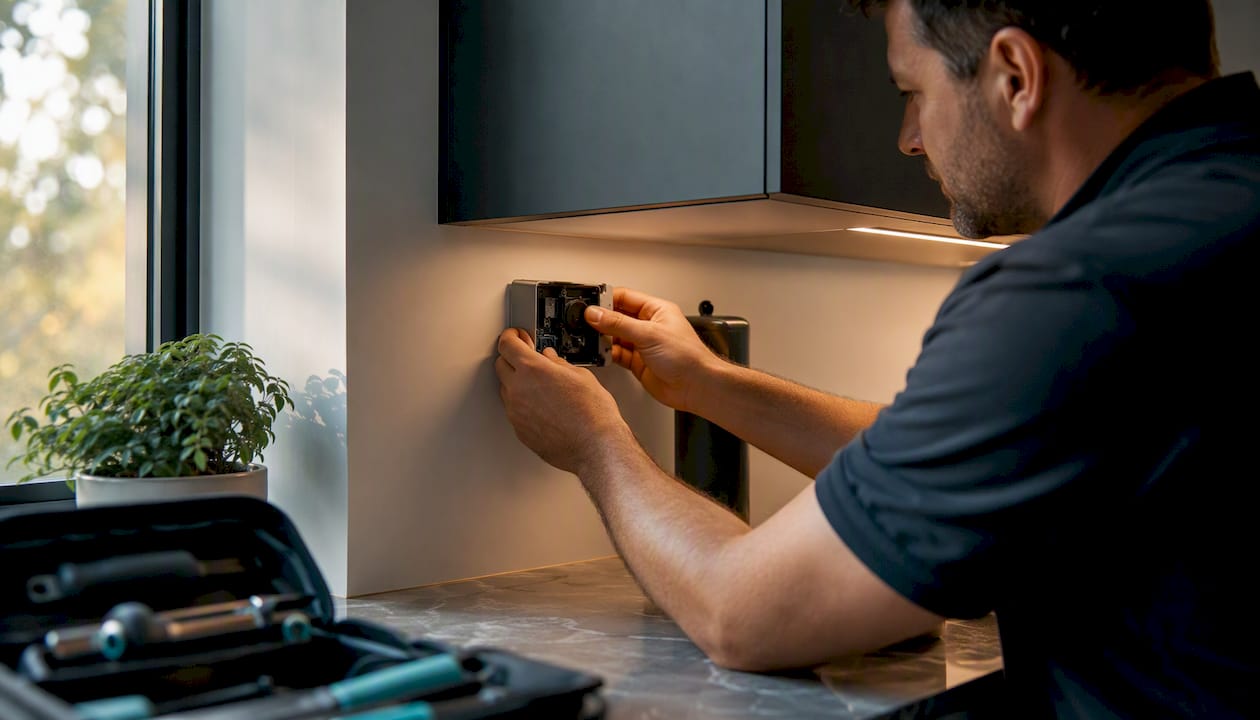
Devices: Smart locks, programmable thermostats, video doorbells, leak detectors, in-unit hubs, or access control panels
Platform access: A resident-facing app for remote control, scheduling, and alerts
Monitoring and support: 24/7 device monitoring, help desk access, and on-site troubleshooting
Software/SaaS: The operator’s property management integration and data reporting layer
Bulk internet or connectivity: Some packages include building-managed Wi-Fi as part of the bundle
Hardware is typically a one-time capital expense for the operator. The monthly fee usually covers SaaS licensing, monitoring contracts, maintenance labor, and sometimes a hardware replacement reserve. When bulk internet is included, the scope expands to include data management and, in some cases, usage analytics that raise resident privacy questions. Ask specifically whether the system collects behavioral data and who owns it.
Pro Tip: At leasing, ask two questions: “Who owns the devices in the unit?” and “What happens to my access credentials when I move out?” If the landlord cannot answer both clearly, that is a gap in their turnover process worth documenting before you sign.
How much are landlords actually charging?
Parks Associates reports that roughly 14% of U.S. apartment residents pay a technology amenity fee, with an average monthly charge near $75. That penetration rate is still relatively low, which means pricing norms are not yet settled across the industry.
A Rent found renters’ average willingness to pay around $37.65/month for smart-home technology, with a first-quartile willingness near $10 and a third-quartile near $52. Willingness rises with device count but flattens after five devices, suggesting that adding more hardware above a certain threshold does not move the needle on perceived value.
Mann Report places common amenity package fees at $45–$60/month, or rolled into rent depending on market. Parks Associates also notes that smart home devices can increase rental fees for multifamily by roughly 5%–30%, depending on package and market.
Market benchmark: Parks Associates reports an average monthly technology amenity fee near $75, while renter willingness to pay averages closer to $37.65 — a gap operators need to close with demonstrated value, not just device count.
Tier | Typical monthly fee | What’s usually included |
Basic | $20–$100 | Smart lock or thermostat only; app access |
Standard | $45–$60 | Lock + thermostat + leak detector + monitoring |
Premium | $75–$100 | Full package + bulk internet + 24/7 support |
Why operators add fees and why residents push back
The business case for smart-home fees is real, but it is not automatic. Understanding both sides helps you design a program residents will accept.
Operator-side benefits:
Leak detectors can reduce water-related maintenance tickets by about 25% and prevent incidents that cost $20,000–$30,000 each
Smart locks reduce lockout calls and key replacement costs
Amenity differentiation can support rent premiums of 5%–30% in competitive markets
Technology packages can improve retention when residents perceive genuine value, as explored in amenity revenue analysis
Resident-side concerns:
Mandatory fees not disclosed upfront feel like bait-and-switch pricing
Privacy concerns around behavioral data collected by in-unit devices
Perceived double-charging when the fee appears alongside a market-rate rent
No opt-out option, even for residents who do not use the technology
YieldPro reports that 83% of apartment renters say technology amenity fees are worth the cost, but satisfaction drops sharply when fees appear designed to offset artificially low base rents. Transparency is the deciding variable.
Pro Tip: Track your opt-out rate and retention delta in the 90 days after introducing a fee. If opt-outs spike or renewal rates drop, the fee structure needs adjustment before you scale it portfolio-wide.
How to operationalize smart-home fee pricing
Getting the fee right operationally requires more than picking a number. Work through these steps before you launch:
Cost-account the program. Separate hardware capex from ongoing SaaS, monitoring, and maintenance in your GL. ASHB estimates retrofit hardware at $800–$1,000 per unit, with ongoing program costs layered on top. Model a three-year payback horizon explicitly.
Define your packages. Basic (one device, app access), Standard (lock + thermostat + monitoring), and Premium (full suite + bulk internet) give residents a clear value ladder and give you pricing flexibility.
Choose your billing method. A separate amenity fee line is more transparent and easier to adjust; rolling it into rent simplifies the resident experience but complicates advertising disclosure. See the compliance section below before deciding.
Write your opt-out process. Decide whether the fee is mandatory or optional, document the opt-out workflow, and train leasing staff on it before the first lease is signed.
Plan for turnover. Resetting smart locks, reassigning credentials, and re-provisioning thermostats add per-turn cost that belongs in your operating model, not your damage deposit assumptions.
Set a quarterly review cadence. Measure resident uptake, opt-out rate, maintenance ticket reduction, and retention delta. Adjust pricing or packaging based on what the data shows, not on what you assumed at launch.
A practical amenity optimization review covers each of these line items and surfaces the gaps operators most often miss.
U.S. disclosure rules and lease language you need
This is where the compliance stakes are highest. The FTC’s action against Invitation Homes alleged that mandatory fees totaling more than $1,700 annually, including smart-home and utility management charges, were not included in advertised rent. The Federal Register’s March 2026 rulemaking on unfair or deceptive rental fee practices formalizes the federal expectation: mandatory fees must be disclosed in advertising and lease documents.
Disclosure checklist for property managers:
Disclosure item | Required action |
Is the fee mandatory? | State clearly in lease and advertising |
Is it included in advertised rent? | Yes, if mandatory — no exceptions |
What does the fee cover? | Itemize devices, services, and SaaS |
Is an opt-out available? | Document the process and conditions |
Is the fee refundable? | State refund policy explicitly |
What is the fee term? | Tie to lease term; state renewal treatment |
Who owns the devices? | Specify landlord vs. tenant ownership |
What data is collected? | Include a privacy/data statement |
Sample lease language (adapt with counsel):
“Resident shall pay a monthly Smart Home Technology Fee of $[amount], which is included in the total monthly rent stated above. This fee covers [list devices and services]. The fee is [mandatory / optional with opt-out available per Addendum A]. Landlord owns all in-unit smart devices. Resident data collected by in-unit devices is governed by the Privacy Addendum attached hereto.”
For advertising, include the technology fee in the total monthly figure whenever it is mandatory. Listing a base rent that excludes a required charge is the pattern that drew FTC scrutiny. Review your leasing and advertising workflows against this checklist before your next marketing push.
Pro Tip: Have counsel review your lease addendum annually. State attorneys general are increasingly active on fee disclosure, and the federal rulemaking landscape is still evolving. Staying current is cheaper than a complaint.
What renters should ask before signing
If you are a renter being presented with a smart-home or technology fee, these questions protect you:
Is this fee mandatory or can I opt out?
Was this fee included in the advertised monthly rent I saw?
What specific devices and services does the fee cover?
Who owns the devices in the unit?
What happens to my access credentials and data when I move out?
Is the fee refundable if I break the lease or the technology fails?
What is the privacy policy for data collected by in-unit devices?
Three red flags to watch for:
The fee appears for the first time after you have submitted an application or signed a lease
The fee is described as mandatory but was not included in the advertised rent
No written maintenance or privacy commitment is available
If you encounter any of these, request a written addendum before signing. If the landlord refuses to provide itemization or a clear opt-out policy, document your requests in writing. Persistent non-disclosure can be reported to your state attorney general or local tenant advocacy organization.
Pro Tip: Ask for the fee schedule in writing before your tour ends. A landlord who cannot produce it on the spot likely does not have a clear opt-out process either.
When should you charge separately vs. bundle into rent?
The right answer depends on your market, your asset class, and how much administrative capacity your team actually has.
Itemizing the fee as a separate line gives you pricing agility. You can adjust it at renewal without repricing the base rent, and residents can see exactly what they are paying for. That transparency tends to hold up better under regulatory scrutiny and resident pushback. It also makes your amenity revenue visible in your NOI reporting, which matters at the asset level.
Rolling the fee into rent works better in markets where residents expect an all-inclusive monthly number and where itemized fees feel like nickel-and-diming. Class A urban properties with tech-forward resident profiles often absorb bundled pricing without friction. The tradeoff is that you lose the ability to adjust the technology component independently, and you need to be certain your advertising reflects the true all-in number.
My practical recommendation: test on a small subset of turnover units first. Introduce the fee on ten to twenty units, measure opt-out rate, renewal intent, and maintenance ticket volume over 90 days, and then decide whether to scale. Skipping the test and rolling out portfolio-wide is where operators get into trouble, both operationally and with residents who feel the change was imposed without explanation.
The Revenue Method can help you get amenity pricing right
Smart home fee pricing sits at the intersection of revenue strategy, lease language, and resident experience. Getting one wrong affects the other two. The Revenue Method provides amenity pricing reviews, lease language audits, and implementation support for multifamily operators who want to charge fairly, disclose correctly, and build a fee structure that holds up at renewal.
Joani Schumaker and The Revenue Method work with apartment owners, operators, and asset managers to build fee programs grounded in real cost accounting, not guesswork. If you are setting up a technology fee for the first time or auditing an existing one, schedule a consulting engagement to review your current structure and close the gaps before they become a compliance issue.
Sources
Recommended


Comments